
Signs Your Rosemount Home Needs Foundation Repair
Rosemount has grown steadily over the past three decades, and much of its housing stock was built quickly to meet that demand — homes from the late 1980s through the 2000s sitting on Dakota County clay soil that has been shifting, swelling, and contracting ever since. For a lot of Rosemount homeowners, the first sign something is wrong comes fifteen or twenty years into ownership, when cumulative pressure finally makes itself visible.
Foundation problems in this part of the south metro follow predictable patterns. The soil, the climate, and the construction era all point to the same set of warning signs. Knowing what to look for puts you in a position to deal with problems before they become significantly more expensive.
Why Rosemount's Soil Creates Foundation Risk
Dakota County's subsurface geology is dominated by glacial moraine material — clay-rich till left behind by the last ice age. The Kilkenny soil series, prevalent throughout Rosemount and the surrounding area, contains 35 to 45% clay in its upper profile and is classified by the USDA as having vertic properties — meaning it expands significantly when wet and shrinks when dry. That cycle of expansion and contraction is continuous and it acts directly on your foundation walls and footings.
The seasonal high water table in these soils sits at 2.5 to 4.0 feet below the surface during April, May, and June. That's the same depth range where your basement walls and footings are doing their job. Spring in Rosemount brings rapidly melting snow — the Twin Cities area averages 51.2 inches of annual snowfall per MN DNR climate records — saturating soil that was frozen solid just weeks earlier. The sudden surge in moisture has nowhere to go quickly in clay, so it builds pressure against whatever is in its path.
The freeze-thaw cycle compounds all of it. Approximately 86 freeze-thaw events occur each year near the soil surface in the metro area, per MnDOT research. Each event pushes water deeper into existing cracks, where it freezes, expands 9%, and widens the opening incrementally.
What Foundation Problems Look Like in Rosemount Homes
Because much of Rosemount's housing stock is newer than the inner-ring suburbs, the pattern of problems is somewhat different. Poured concrete foundations are more common here than the concrete block foundations found in older Bloomington or Minneapolis-area homes. But poured concrete carries its own vulnerability — and in Dakota County clay, the pressure is the same regardless of what the wall is made of.
Here are the signs to look for:
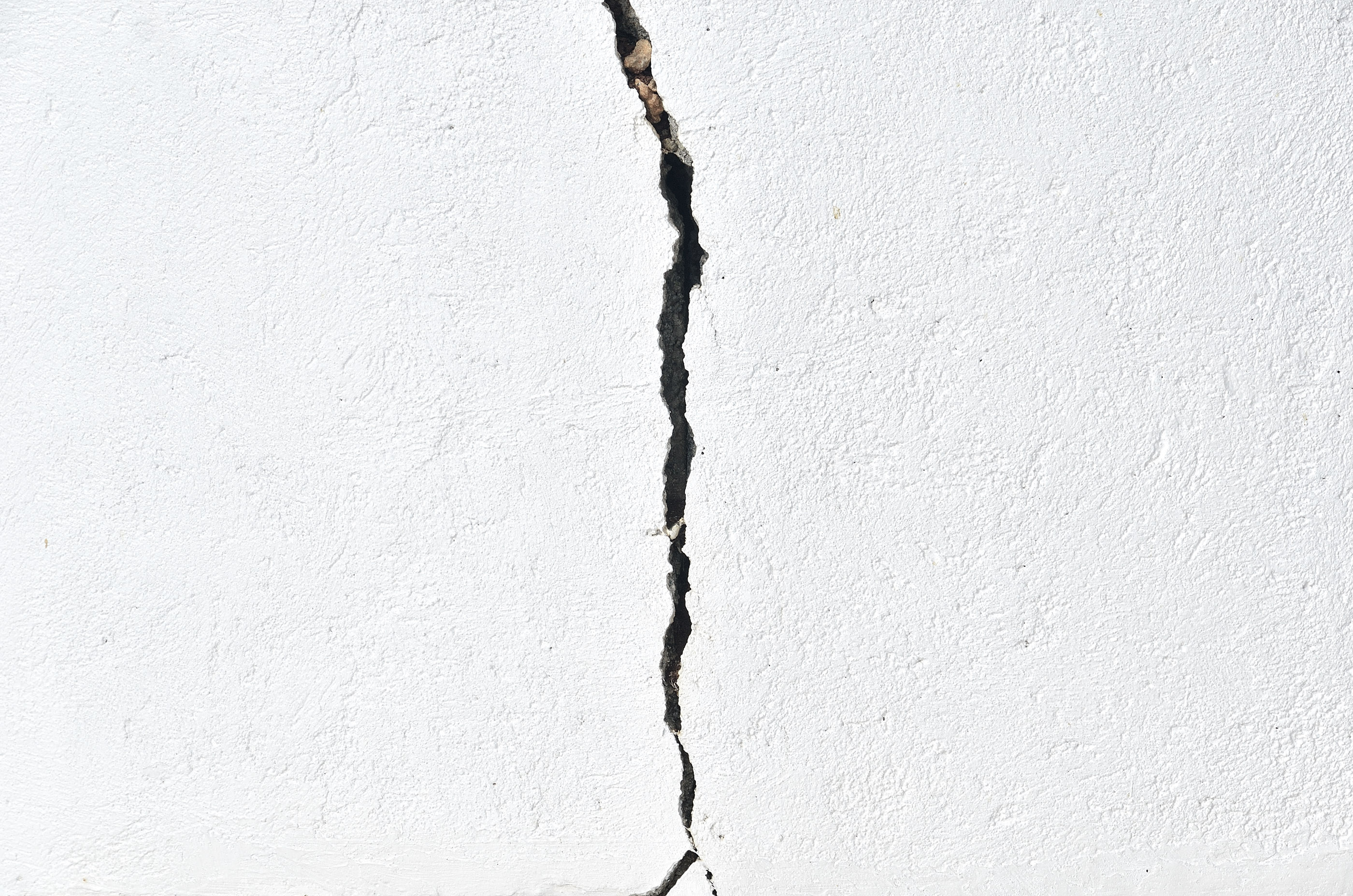
Horizontal cracks running across basement walls. This is the most serious crack type. A horizontal crack means the wall is being pushed inward by lateral soil pressure. It is a structural issue, not a cosmetic one. Left unaddressed, horizontal cracks widen over time and the wall can fail. If you see one, get it evaluated promptly.
Diagonal cracks from door and window corners. These run at roughly 45 degrees from the corner of an opening and are typically wider at one end. The wider end points toward the direction of movement. Diagonal cracks in poured concrete indicate differential settlement — one part of the foundation is sinking more than another.
Stair-step cracks in any brick or block sections. Where stair-step cracks follow mortar joints diagonally, they indicate lateral pressure or differential settlement acting on that wall segment.
Doors and windows that stick, drag, or won't latch. Foundation movement translates upward through the structure. Door frames go out of plumb. A door that swings freely in summer may drag on the floor in spring after a wet season moves the foundation. Windows that used to stay open on their own now slide closed.
Water entering at the cove joint. The seam where your basement floor meets the wall is a cold joint — the two pours bonded together but structurally independent. When hydrostatic pressure builds in saturated clay outside your foundation, this joint is where it first breaks through. Water at the cove joint is a pressure problem, not a crack problem, and requires drainage management rather than patching.
Floors that slope or feel uneven. Settlement shows up in floors early. A noticeable slope toward one corner of a room, or a section of floor that deflects underfoot, is worth investigating. Differential settlement beneath the slab can cause floor movement before visible wall cracks appear.
Gaps opening between walls and ceilings or trim. Nail pops that recur despite being fixed, trim that separates from wall surfaces, or visible gaps at wall-ceiling junctions all indicate ongoing structural movement.
The Block Foundation Question Doesn't Apply Much Here — But Something Else Does
Unlike Bloomington or South Minneapolis, where concrete block foundations from the 1950s and 1960s are common, most Rosemount homes were built with poured concrete. Poured walls are stronger in tension and less porous than block.
What Rosemount's newer homes do face is a different risk: they were built rapidly on disturbed soil, often backfilled with material that wasn't properly consolidated. Backfill that hasn't settled fully creates voids and soft spots adjacent to foundation walls — areas where water pools, where soil erodes, and where pressure concentrates. Homes built in the 1990s and early 2000s on rapidly developed subdivisions can have this issue even if the construction itself was technically sound.
If your home is showing signs of movement and was built on what used to be farmland or undeveloped land on the outer edge of the metro, the backfill history is worth considering when you get an assessment.
When to Call for an Assessment
Not every crack demands immediate action. A hairline vertical crack in a poured concrete wall that has been stable for years and doesn't allow water entry may simply need monitoring. The Minnesota DLI frost depth map confirms Rosemount is in Zone II, requiring 42-inch minimum footing depth — properly built foundations in this zone have good longevity when drainage is maintained.
But these signs call for prompt evaluation without waiting: any horizontal crack, any bowing you can see with the naked eye, any new water entry at the cove joint, and any floor slope that has developed or worsened in the past year. These are not signs to defer.
Christian Brothers Construction serves Rosemount from our base in Burnsville, right at the center of Dakota County's south metro service area. If you're seeing something you're unsure about, call us at (952) 898-3559 for an honest assessment. We look at the whole picture before recommending anything.


