
Foundation Repair in Farmington, MN — What Homeowners Need to Know
If you've noticed a crack spreading along your basement wall, a door that started sticking this past winter, or a damp smell drifting up from the basement every spring, your foundation is telling you something. For Farmington homeowners, these signals are more common than most people expect — and the reasons are specific to this part of Dakota County.
Foundation problems don't appear at random. They develop over years as soil conditions, freeze-thaw cycles, and drainage systems put cumulative pressure on your home's structure. Understanding what's driving the problem is what separates a fix that lasts from one that fails in two years.
Here's what you need to know about foundation repair in Farmington, Minnesota.
Why Farmington Foundations Work Harder Than Most
Farmington sits on glacial moraine terrain — soil deposited by the Des Moines lobe of the last ice age roughly 14,000 years ago. What that means for your home is a soil profile dominated by clay. The Kilkenny soil series common throughout southern Dakota County contains 35 to 45% clay in its upper layers, with what soil scientists classify as vertic properties, per the USDA's Official Series Description. That's a technical way of saying the soil expands when it absorbs water and contracts when it dries out.
Farmington's position at the southern edge of the metro means it experiences the full force of Dakota County's seasonal water table swings. That same USDA data shows the seasonal high water table in Kilkenny soils rises to between 2.5 and 4.0 feet below the surface during April, May, and June — directly adjacent to where your foundation footings are working.
Then there's the freeze-thaw cycle. The Twin Cities metro area experiences approximately 86 freeze-thaw cycles per year near the soil surface, according to MnDOT research. Each cycle is incremental damage: water finds any existing crack or void, freezes and expands 9%, and widens the opening. Multiply that by decades of Minnesota winters and you understand why foundations in Farmington don't fail all at once — they erode gradually until something finally gives.
What Minnesota's Frost Depth Code Means for Farmington Homes
Minnesota State Building Code requires footings to be set at a minimum of 42 inches below grade in the Twin Cities area, designated Zone II under Minnesota Rules 1303.1600. Farmington falls in this zone. The code requirement exists because frost in this region can penetrate well beyond two feet in a severe winter, and footings above the frost line will heave.
For homes built in Farmington's earlier development periods — the city grew substantially through the 1990s and 2000s as the south metro expanded outward — footings installed at the minimum depth don't leave much margin. A winter that pushes frost deeper, combined with a wet spring saturating clay soils before they fully thaw, puts those footings under stress they weren't engineered to absorb repeatedly over thirty or forty years.
The combination of deep code-required footings, clay soils that move with moisture, and a climate that delivers roughly 51 inches of annual snowfall per MN DNR climate data is what makes foundation issues a predictable challenge for Farmington homeowners — not a matter of bad luck or poor construction.
The Signs That Tell You It's Time to Call
Foundation problems rarely arrive loudly. They accumulate and show up in ways that are easy to dismiss as normal settling or seasonal quirks — until they aren't. Here are the signs that should prompt you to get an assessment:
Horizontal cracks in basement walls. A horizontal crack running across a basement wall is the most serious type. It indicates the wall is being pushed inward by lateral soil pressure. This is not cosmetic. The pressure that created the crack is still there, and the wall will continue to move unless it's addressed.
Diagonal cracks from window and door corners. A crack running at 45 degrees from the corner of an opening, wider at one end than the other, is a reliable indicator of differential settlement. The wide end points toward the movement.
Doors and windows that stick or bind. When a foundation shifts, the structure above it shifts too. Door frames go out of square. Windows that opened smoothly last year suddenly require effort. This is especially common in two-story Farmington homes where the upper structure transmits movement clearly.
Water at the cove joint. The seam where your basement floor meets the wall is the most common entry point for hydrostatic pressure. Water appearing there tells you the drainage management outside your foundation isn't handling the load.
Bowing basement walls. A visible curve or lean in a basement wall means the soil outside is winning. Don't wait on this one.
What Foundation Repair Actually Involves
"Foundation repair" describes a range of solutions, and the right one depends entirely on what's causing the problem. An honest assessment looks at the whole picture — not just the symptom on the wall.
For bowing walls: When deflection is under two inches, carbon fiber straps bonded to the wall can halt further movement. When deflection is greater, wall anchors — steel plates inside connected by threaded rods to buried anchor plates outside — can both stabilize the wall and gradually recover position over time with periodic tightening. Reconstruction is reserved for walls that have moved beyond what anchoring can address.
For settling or sinking: Helical piers are screwed through unstable surface soil into the load-bearing stratum below, then bracketed to the existing footing. The home's weight transfers to stable soil. In some cases this allows controlled lift back toward the original elevation.
For water at the cove joint: This is a water management problem, not a wall problem. Interior drain tile installed along the basement perimeter captures groundwater before it can enter the living space and routes it to a sump pump.
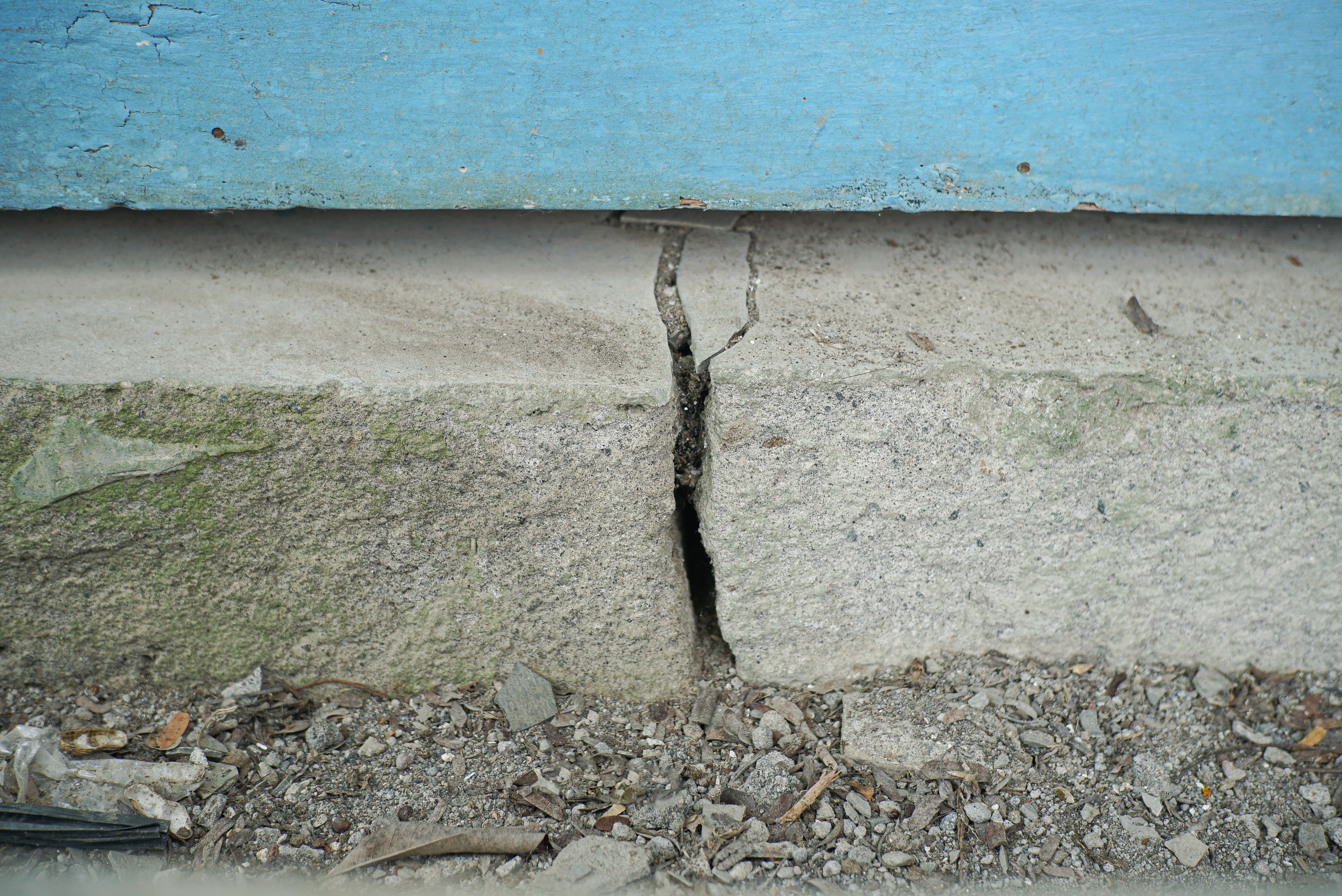
For isolated poured concrete cracks: Epoxy or polyurethane injection seals individual stable cracks. This is appropriate for vertical shrinkage cracks that aren't growing and aren't associated with structural movement.
The core principle: a crack is usually a symptom of a cause that lives somewhere else — in the soil, the drainage, the grade around the home. Treating the symptom without identifying the cause is how repairs fail.
What to Know About Permits in Farmington
Structural foundation work in Farmington requires a building permit. The City of Farmington's Building Inspections department handles permit applications and can be reached through the City of Farmington's official website. Any contractor proposing significant foundation work who doesn't mention permits should prompt a direct question.
Christian Brothers Construction is based in Burnsville and serves Farmington and the surrounding south metro communities. If you're seeing signs of foundation movement and want to understand what's actually happening, call us at (952) 898-3559. We take a comprehensive look at the full drainage and structural picture before recommending anything.


