
Basement Waterproofing in Eagan, MN — The Right Way to Keep Water Out
Water in your basement is not bad luck. It's a predictable outcome of specific conditions — and in Eagan, those conditions are present in nearly every neighborhood. Clay soil. A high seasonal water table. And a spring that delivers nearly a foot of rain on top of months of accumulated snowmelt.
Once you understand what's actually driving the water in, the path to a dry basement becomes clear. And more importantly, you stop wasting money on solutions that address the wall instead of the water.
Why Eagan Basements Get Wet
The Twin Cities receives 31.62 inches of precipitation per year based on the 1991–2020 climate normals published by the Minnesota DNR. That figure is worth putting in context: April, May, and June alone deliver roughly 11.4 inches. Add to that the 51.2 inches of annual snowfall that melts in late March and April, and the spring period in Eagan is an extended siege of water pushing against your home's foundation.
The soil makes this worse. According to UMN Extension's guide on moisture in basements, clay soils have a capillary rise of 12 to 20 feet — meaning water in saturated clay can climb that height against gravity through capillary action alone. Your basement floor is typically 6 to 8 feet below grade. Clay soil doesn't just allow water to reach your foundation; it actively draws it there.
There's also what contractors call the clay bowl effect. When a home is built, the soil backfilled around the foundation is looser than the surrounding native clay. That backfill zone acts like a channel, pulling rain and snowmelt directly down to your foundation walls. The native clay outside the backfill zone holds the water in place rather than letting it drain away.
The result is sustained hydrostatic pressure — the weight of water-saturated soil pressing against your basement walls from all sides. Water at just five feet of depth exerts over 100 pounds per square foot of pressure. That pressure finds any crack, any joint, any void.
The Most Common Entry Points for Water
Knowing where water enters helps you evaluate solutions. In Eagan homes, the most frequent entry points are:
The cove joint. This is the seam where your basement floor meets the wall. It's not a structural joint — it's a cold joint where two separate pours meet. When hydrostatic pressure builds outside your foundation, this joint is the path of least resistance. Water that appears here is not a wall problem. It's a pressure problem.
Cracks in poured concrete walls. Vertical cracks from normal concrete shrinkage, diagonal cracks from differential settlement, and — most seriously — horizontal cracks from lateral soil pressure. Each type has its own cause and its own repair approach.
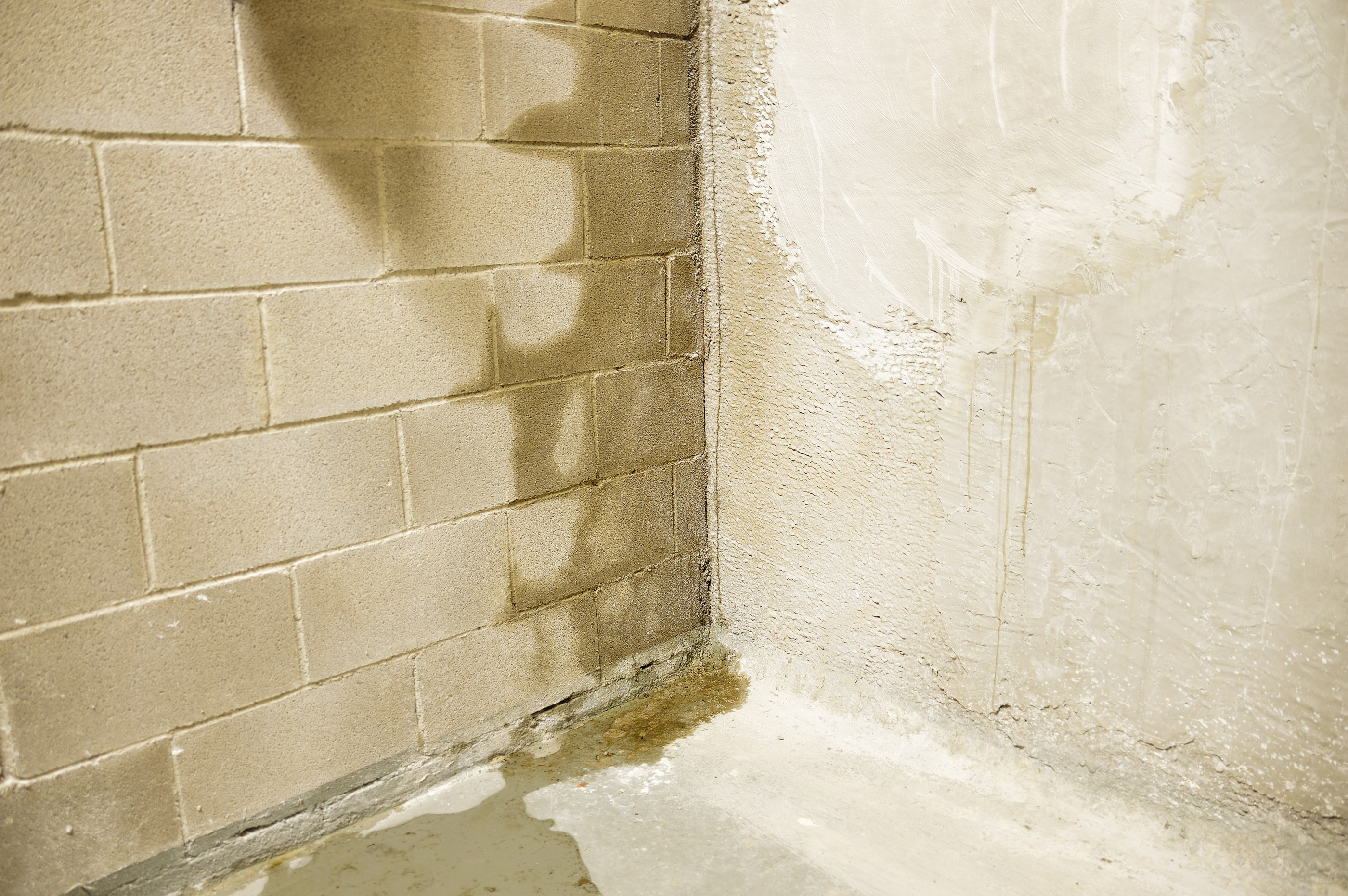
Block wall seepage. Concrete block walls are porous by nature. Water doesn't need a crack to get through a block wall — it percolates through the blocks themselves. You'll often see a white chalky residue called efflorescence on block walls where water has been migrating through and leaving mineral deposits behind.
Window wells. Poorly drained window wells fill with water after a hard rain and direct it straight down the exterior wall and into the basement.
Floor cracks. When the water table rises above your basement floor level, which it can in Dakota County clay soils during peak spring months, water can come up through cracks in the floor slab itself.
Interior Waterproofing vs. Exterior Waterproofing — What's Right for Your Home
The foundational question in basement waterproofing is whether to address the water from the inside or the outside.
Exterior waterproofing involves excavating the soil down to your footing level, installing a waterproofing membrane against the foundation wall, placing drainage board, and installing drain tile at the footing. The work happens in two to four days but requires significant disruption to landscaping. It's the most effective prevention method when done correctly, and it's the standard approach for new construction. For an existing home, it typically costs two to three times more than interior methods.
Interior drain tile is the most common solution for existing homes. A trench is cut around the inside perimeter of your basement floor, perforated pipe is installed in a gravel bed, and the concrete is replaced. The system intercepts groundwater before it can enter your living space and channels it to a sump pit where a pump ejects it away from the home. It does not stop water from entering the wall — it manages water that has entered before it can cause damage. For most Eagan homeowners dealing with recurring wet basements, interior drain tile combined with a quality sump pump is the right answer.
According to the Minnesota DLI's adopted building codes, drain tile systems must discharge to a sealed sump pit, and the grade around your home must slope away at least six inches within the first ten feet.
What Doesn't Work — And Why People Keep Buying It
Waterproof paint and hydraulic cement are the most commonly sold temporary fixes in the basement waterproofing market. They're inexpensive and they feel reassuring to apply. They also fail.
Waterproof paint and masonry sealants applied to the interior of a wall are fighting against hydrostatic pressure. The water behind the wall is pushing toward you at 100+ pounds per square foot. The sealant is pushing back with the strength of a thin coat of paint. Eventually, the water wins — and when it does, it peels the coating off and takes chunks of the wall with it.
Hydraulic cement expands as it cures to fill an active crack. For a single crack with no ongoing pressure, it can work as a temporary measure. For a basement with systemic water entry from multiple points, it's filling holes in a boat that's still sinking.
The Building Science Corporation's foundational guide on basement moisture, authored by building scientist Joseph Lstiburek, notes that water management must address the source and the path — not just the point of entry.
The Right Starting Point Before Spending Anything
Before investing in any waterproofing system, UMN Extension recommends starting with the low-cost interventions:
- Check that your gutters have at least one downspout per 50 linear feet of roof eave
- Extend downspout discharge at least four feet from the foundation wall
- Regrade soil around the home to fall six inches in the first ten feet
- Fill and drain window wells that collect standing water
These steps address the most common drivers of basement moisture and sometimes solve the problem entirely. If water persists after those corrections, a drain tile assessment makes sense.
If you have water in your Eagan basement and want to understand what's actually causing it, Christian Brothers Construction offers consultations at (952) 898-3559. We take a comprehensive look at your home's drainage picture before recommending anything.


